

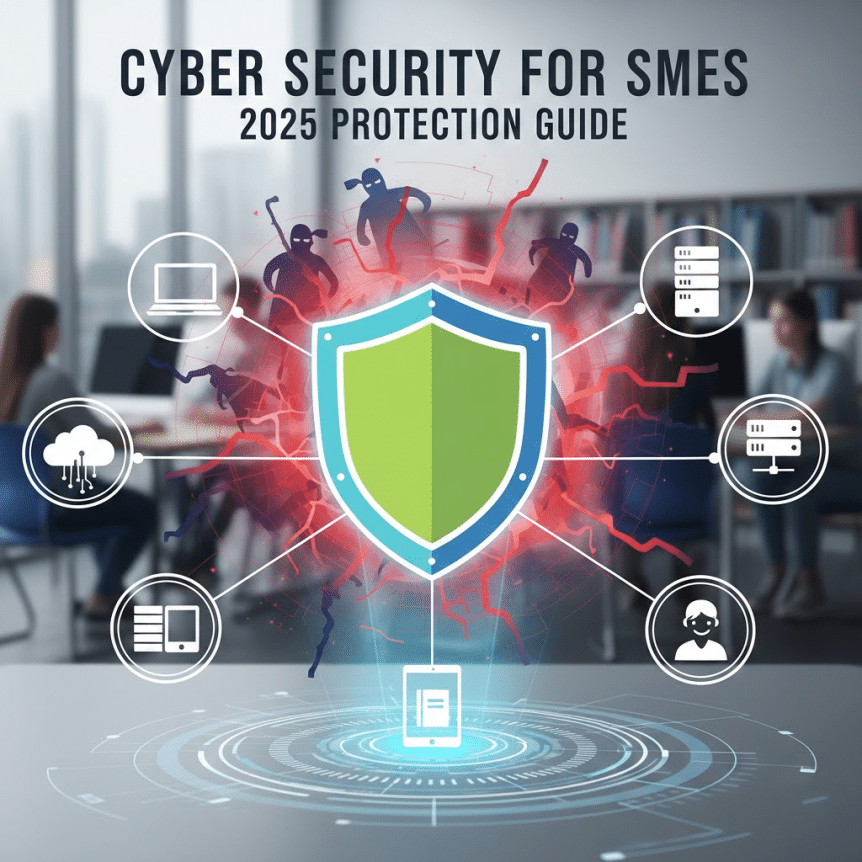
Educational institutions are now one of the top targets of cybercriminals, and the number of attacks has grown significantly in recent years. The shift to digital learning platforms, online student records, and cloud-based systems has introduced many vulnerabilities. Schools hold extremely sensitive data, including student personal data and finances, and therefore they are active targets of ransomware gangs and data attackers. The consequences of a successful breach can be disastrous, interrupting the learning process, compromising privacy, and damaging reputations. Every institution should implement proactive measures to protect schools from cyber attacks.
It takes a multi-layered strategy to create a safe educational environment, which involves technical security, policy plans, and human awareness. Let’s discuss how to protect schools against cyber attacks.
Common cyber threats facing educational institutions
Like every organisation, schools face several cybersecurity challenges, but these are not as common as in typical corporate settings.
Phishing attacks in schools are the most common, where employees and students receive fraudulent emails that steal credentials or install malware. Such attacks usually impersonate trusted sources, such as educational authorities or other popular learning platforms, and are hard to detect. Secondly, ransomware attacks on schools have become more devastating, as cyberattackers encrypt entire networks and demand large sums to restore data.
There are several more common cyber threats facing schools:
- Distributed denial of service (DDoS), which is a network congestion attack
- Insider threats from employees or students
- Learning systems are not patched against software vulnerabilities
Strengthening data protection and system security
Safeguarding student and staff data should be a priority. Every school must follow key protection measures. Those include:
- Automated backup systems with regular testing Frequent backups, stored on-site and off-site, create a safety net that ensures that ransomware attacks do not permanently damage data.
- End-to-end encryption for sensitive communications School cybersecurity measures should include encrypting all stored data, especially personal information and financial records. This means that even if data is stolen, it remains unreadable without the encryption keys.
- Email security for schools Email security needs advanced filtering solutions that detect and block phishing websites before they can reach the users. These systems are supposed to scan suspicious attachments, links, and spoofed sender addresses.
- Access logging and monitoring for unusual activity Securing cloud platforms in education is another important step, which is why access controls and data governance must be implemented.
- School network security This security must cover all the connected systems, including third-party applications.
Implementing strong school IT security measures
Strengthening school IT security is a multifaceted effort that starts with understanding the digital infrastructure and identifying its weakest points.
Network segmentation acts as a first line of defence, separating student devices from administrative systems and restricting the spread of a breach. School firewall and network protection should be implemented at multiple levels to provide layers of defence that make unauthorised access harder. Firewalls analyse patterns, identify irregularities, and detect new threats instantly. Regular security auditing also helps identify vulnerabilities before attackers can exploit them.
Schools must adhere to these basic necessary technical controls:
- Patch management and software updates are regularly
- Secure configuration of all network devices
- Secure transmissions of data
Developing effective school cyber security policies
Strong technical defences are useless without explicit policies to direct their application. School cyber security policies should include acceptable use policies for all technology, defining how it should be used and outlining the consequences of misuse. These policies should be all-inclusive and practical, balancing security and usability.
Cyber risk management for schools requires periodic policy reviews to ensure they align with evolving threats. An incident response plan is an essential element that outlines who, what, and when an incident occurs, turning potential chaos into action.
To address the problems, the following components make up the policy framework:
- Access controls for sensitive data
- Bring your own device (BYOD) security guidelines
- Data storage protocols
Building a culture of cyber awareness
Technology alone cannot protect schools from cyberattacks; human behaviour remains the most significant vulnerability.
Staff cyber awareness training for schools should be mandatory for all employees to address new threats. Training programmes should include realistic simulations that help staff recognise actual threats they might encounter.
School IT security should also include cybersecurity training for students that educates them to identify suspicious emails, use strong passwords, and safeguard their personal information online. When the entire school community is careful, cyber security will improve. Furthermore, multi-factor authentication for schools should be implemented across all systems, providing an additional layer of verification and reducing the risk of credential theft.
Conclusion
Implementing school cyber security requires dedicated resources, effort, and continuous monitoring. Preventing cyber attacks in schools requires an integrative approach that balances the use of technology, people, and processes equally. That’s why the strategies outlined above provide a baseline for developing a safe learning environment.
Many schools lack the expertise to implement these complex security measures effectively. This is where outsourcing school cyber security services proves easier and more cost-effective. If you need such, Cygnet IT is here to provide customised security solutions that specifically meet the needs of schools. Do not wait until data is breached; act now and contact us to strengthen your school’s cybersecurity.